
Feature
Demand and footfall forecasting
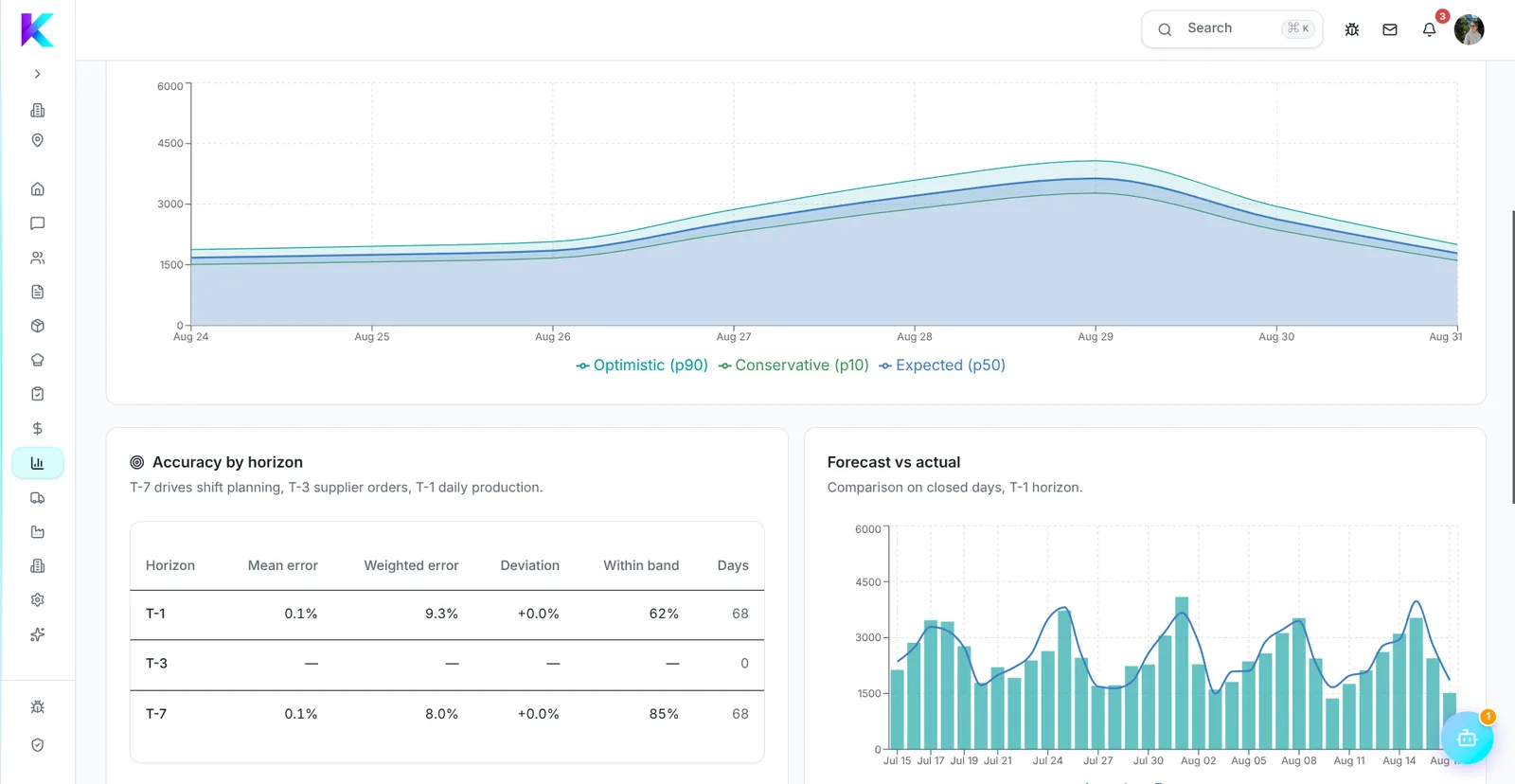
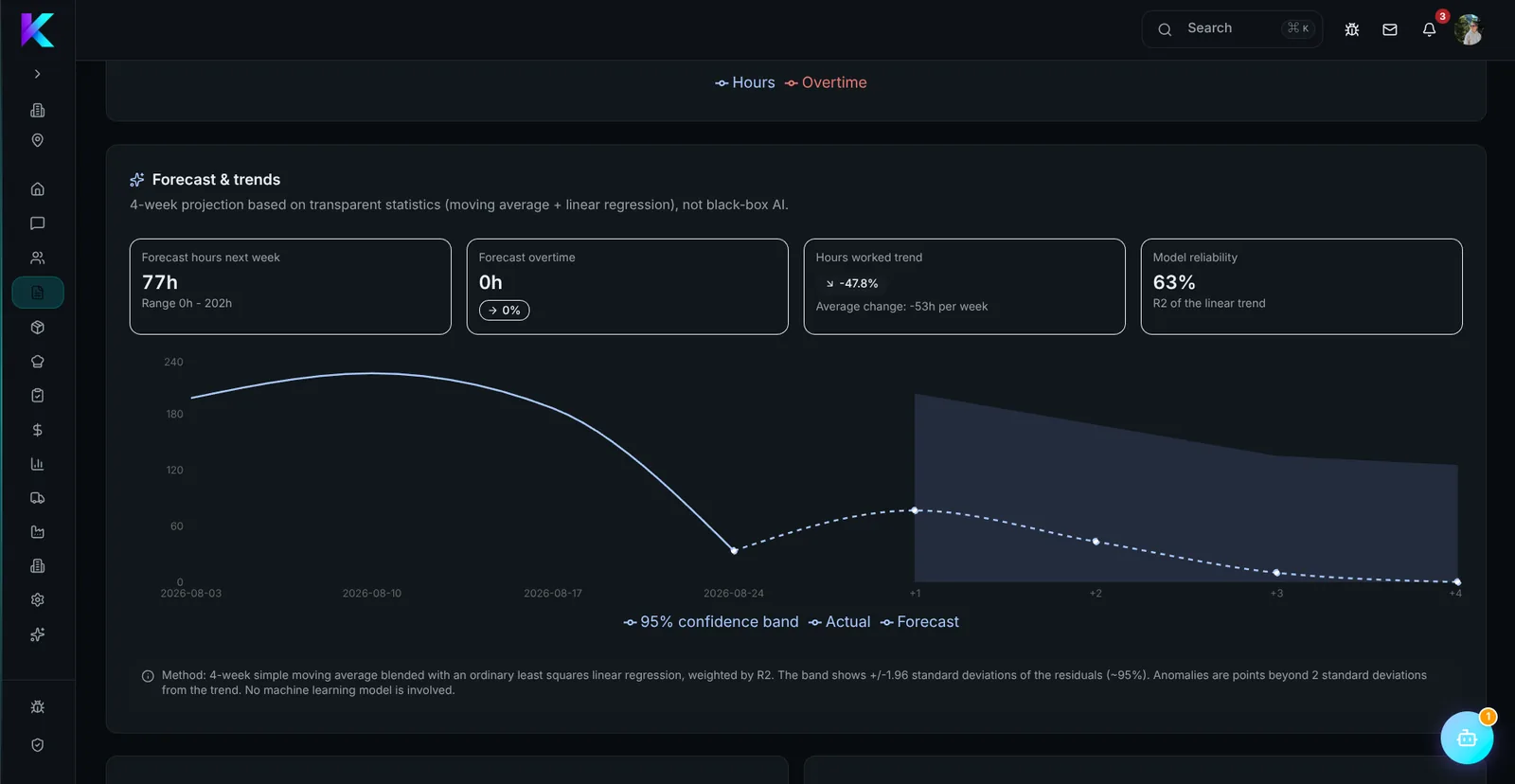
Knowing how much work is coming changes rotas and production. Klyra estimates demand from history, weather and the calendar.
The cost of not forecasting
Wrong staffing
Too many people on quiet days, too few during peaks.
Guessed production
You produce too much and waste it, or too little and lose sales.
Decisions based on feel
"Fridays are usually good" is not a measurable criterion.
How it works
1. Collect history
Past sales and activity become the statistical base.
2. Add external signals
Weather and holidays adjust the forecast through a Bayesian model.
3. Use it in the planner
The forecast drives rotas and production planning.
Klyra in pratica
What you get
- Daily estimate
- Expected demand for coming days
- External signals
- Weather and holidays included
- Operational use
- Connected to shifts and production
- Continuous improvement
- Accuracy grows with history
Frequently asked questions
How much history is needed?
More data means a steadier estimate; in the first weeks the forecast stays conservative.
Does weather really matter?
For terraces, delivery and tourism the impact is real; the model weights it using your own data.
Is forecasting automatic?
Yes, it updates with available data and is visible in the dashboard.
Can I ignore it?
Yes, it is decision support: operational calls remain yours.
Does it work without a POS?
It works best with sales data but can also use activity recorded in Klyra.
Continua a leggere
Plan on expected demand
Rotas and production sized on data, not on gut feel.
Prova gratis